
This is independent educational commentary based on a public newsletter archive. Wilson Browne Solicitors isn't presented as a client or sponsor. The image below is a limited archive preview used for commentary; complete issues remain with the original publisher.
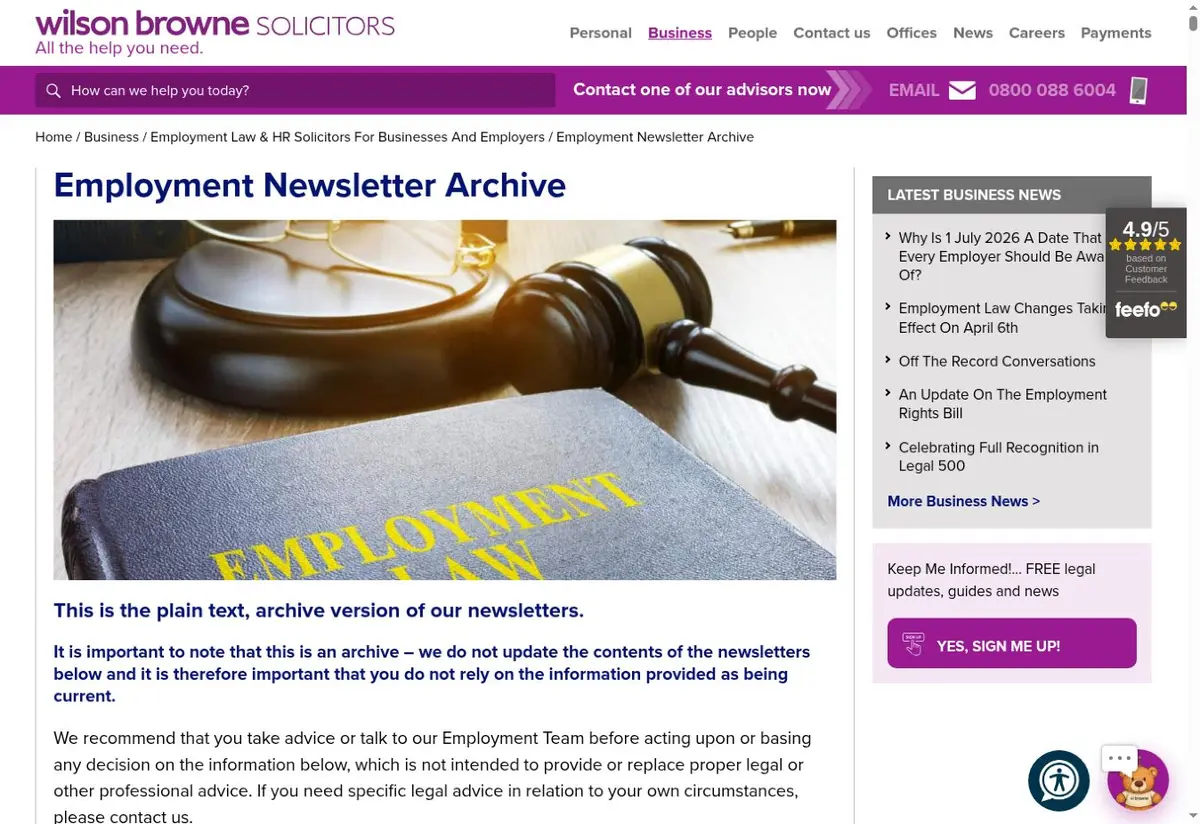
View Wilson Browne Solicitors’s original archive →
The editorial idea in one sentence
A quarterly employment-law archive is built around legislation, cases, and practical employer decisions, not consumer education.
1. Positioning: who is this publication for?
B2B readers need implications, deadlines, and actions. The newsletter earns attention when it translates developments into what HR or leadership should review now.
2. Content mix: why a reader would come back
Prioritize one major change, a short case roundup, an operational checklist, and upcoming dates. Firm news should be included only when it helps the business reader.
The broader lesson is to assign every section a job. Some content should create immediate utility, some should demonstrate perspective, and some should deepen familiarity. When every section tries to sell, the newsletter stops feeling like a publication.
3. Design and reading experience
Use executive summaries, risk labels, effective dates, and “what to do” boxes. Busy decision-makers should be able to extract the action without reading every legal detail.
For email, the mobile preview is the real front page. The sender name, subject line, preheader, first heading, and first link should tell a coherent story before the reader reaches the rest of the issue.
4. Calls to action: what should happen next?
Offer a policy checklist, webinar, briefing, or targeted conversation. A broad contact-us button is less useful than an action connected to the development discussed.
A newsletter can support more than immediate consultations. Replies, forwards, downloads, event registrations, preference selections, and return visits all show that the relationship is becoming more useful.
5. What I would test next
Segment by organization size or reader role and compare which practical formats, checklist, webinar, case digest, move HR leaders to substantive engagement.
Change one meaningful variable at a time and judge it by the action the issue was designed to create. Don't declare a winner from open rate alone.
Practical takeaways for another firm
- B2B readers need implications, not only updates.
- Dates and actions deserve visual priority.
- Role-based segmentation can sharpen relevance.
- The best CTA helps implement the advice.
A deeper scorecard
Audience clarity
Can the right reader identify themselves immediately?
Editorial promise
Is there a repeatable reason to subscribe beyond firm announcements?
Content architecture
Does each section have a distinct role and visual priority?
Human voice
Could this newsletter plausibly come only from this firm?
Trust and restraint
Are tone, privacy, accuracy, and urgency appropriate to the audience?
Next step
Is the primary CTA useful, specific, and proportional?
Bottom line
Wilson Browne Solicitors is worth studying because it makes a recognizable editorial choice. The goal isn't to copy the surface treatment. Borrow the strategic principle, adapt it to your firm’s audience and obligations, and test whether it creates a more useful long-term relationship.